|
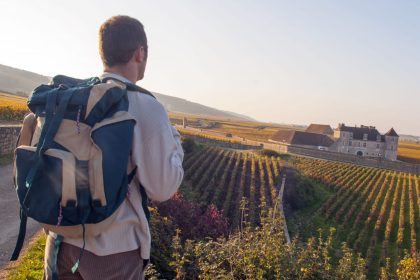
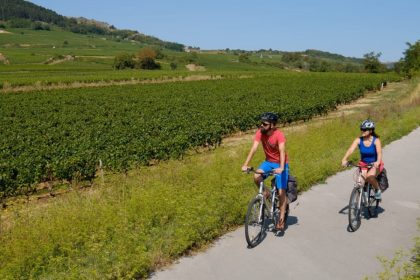
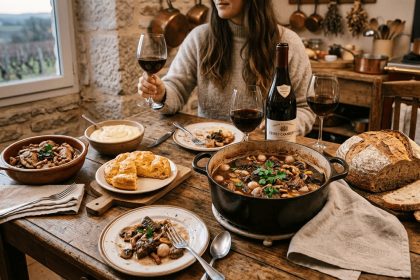
Wine Growers The Beaujolais Revival ![]() Click for large view A few years ago, the only word that would ever follow “Beaujolais” was “Nouveau”. However, in recent years there has been a real turnaround in the perception and fortunes of the region. Wine preferences have changed, quality has improved and wine drinkers are learning that there is a lot more to this region than the primeur wines. The new words on wine drinkers’ lips are “Beaujolais is back!” Beaujolais is in eastern France and is part of the Burgundy winemaking region. The area is located north of Lyon, and covers parts of the north of the Rhône département (Rhône-Alpes) and parts of the south of the Saône-et-Loire département (Burgundy). The picturesque Beaujolais vineyards extend for 35 miles along the Saône river. As Thomas Henriot from the Champagne house, Maison Henriot – a recent investor in the region – said, “Countryside as beautiful as this can but make excellent wines.” People who find many red wines bitter or harsh or are looking for an antidote to rich and oaky wines will enjoy Beaujolais, which are lighter and don’t have rough tannins. These low tannins make the wines a great companion for all sorts of food, ranging from traditional French to fish to spicy Asian.
Gamay Beaujolais reds are all made from 100% Gamay grape which produces light wines which have a flirty, fruity aroma and an appetising acidity followed by a refreshing rush in the mouth. Gamay is today almost exclusively the Beaujolais grape variety and of the 36,000 hectares of Gamay planted throughout the world, 20,500 are in the Beaujolais vine growing area. It has found its perfect home in the limestone-clay and granite soils of the Beaujolais region – and is there to stay. 12 appellations Beaujolais is made for all year-round drinking and handily there are 12 appellations from the region so that you can try a different one each month. They include Beaujolais, Beaujolais-Villages and the 10 Crus. “Cru” literally means “named vineyard” and denotes a wine of greater quality so the Crus are something to look out for if you fancy something a bit special. All the wines are great to drink any time of the year and are delicious served slightly chilled. Pop a bottle in the fridge for half an hour before serving. It should not be as cold as for white wine but just cool to the touch - ideally between 12 and 14°C. Brouilly Chénas Chiroubles Côte de Brouilly Fleurie Juliénas Morgon Moulin à Vent Régnié Saint-Amour Beaujolais-Villages Beaujolais Winemaking with a difference Another unique feature of Beaujolais production is the winemaking technique of semi-carbonic maceration. This is where whole bunches of grapes are put into vats to ferment. The grapes at the bottom of the vat are gently crushed by the weight of those above and begin to ferment. As the sugar begins to turn into alcohol, carbon dioxide is given off which, because it is heavier than air, remains trapped at the bottom of the vat. Surrounded by the gas, the other berries begin to ferment from inside out and then to split gently. The effect is a very light wine, with vibrant fruit flavours and almost no perceptible tannin. Big change ![]() © Daniel Gillet The Gamay variety has some very specific characteristics: it is very resistant to disease and is fertile, yet is particularly difficult to train. It requires very careful attention and so the vines are traditionally planted very close together: from 8,000 to 10,000 vines per hectare. However, since 2004, this can now be reduced to 6,000 vines/ha and many winegrowers are re-shaping their estates and decreasing planting densities. Hard pruning is applied so that only three to five arms are left on each vine and a maximum of 10 eyes (buds). “Green harvesting” is also carried out in July to reduce the number of bunches per vine to gain better yield control. Even a decade ago this “pre-harvest” was unusual, yet today, it is becoming more widespread with every vintage. Yields are also being lowered (a reduction from 64 to 52hl/ha from 2000 to 2008 for the Beaujolais appellation; from 60 to 52hl/ha for Beaujolais-Villages and from 58 to 52 hl/ha for the crus). As they say, the best things come in smaller packages. Harvesting in Beaujolais has always been done by hand. But mechanical harvesting trials are now being tested on small areas of the region. The new mechanisation is part of an evolution in the Beaujolais vineyard where traditional gobelet vines (ancient method of vine training using no wires or other systems of support resulting in a goblet-shaped growth) are also in the process of being replaced by the palissé (trellised) method of vine training. ![]() © Daniel Gillet Beaujolais winemakers have green fingers in more ways than one. They want to make a positive impact on the environment and are working to fight against soil erosion in the vineyards. It was in fact in the Beaujolais region that Terra Vitis was founded. Not to be confused with organic producers, this is a group of winemakers from all over France who believe that the only way to produce quality grapes for wine is through respect for the ecosystem. They believe in using integrated vine growing and winemaking techniques (taking into account natural factors and the cultural know-how – vine variety, pruning etc – of an area in order to reach the best possible quality and typicity of the wine). However, more and more organic wines are also being produced in the region. Ultimately, these changes and improvements are aimed at producing the best wine possible from the region. With trends in the UK veering towards the lighter, fruitier, lower alcohol wines, the genie in the Beaujolais bottle will make all wine drinkers’ wishes come true. For further information on Beaujolais wines, visit www.beaujolais.com.
|
|||||||||||||||||||||||||||||||||||||